


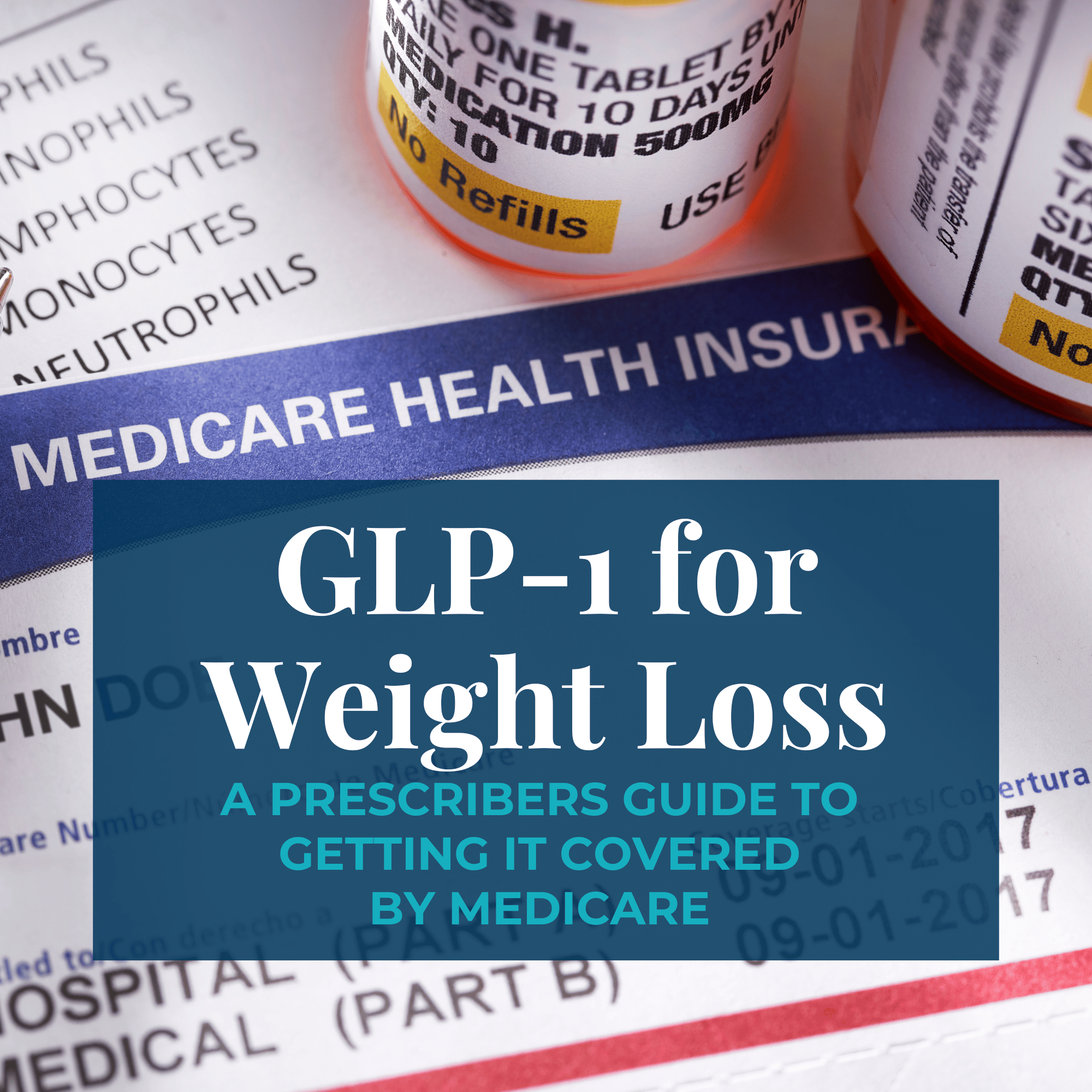
The Medicare GLP-1 Bridge: Three Reasons Prior Authorizations Get Denied
Your patient has been asking about Wegovy for two years. She is on Medicare, she does not have diabetes, and every previous conversation ended the same way. Then on July 1, 2026, that changed.
The Medicare GLP-1 Bridge opened a coverage pathway for GLP-1 medications prescribed for weight management. It is a real pathway with a $50 monthly copay, and it runs through December 31, 2027.
It also has criteria specific enough that a thorough, well-written note can still produce a denied request. Three things account for most preventable denials, and all three are avoidable if you know about them before you send the prescription. This article covers what the program is, who qualifies, and those three failure points, so your first submission is your only submission.

I Don't Do It All: The NP, Working Mother, and the Myth of Handling Everything
There is a question that shows up in every NP group, usually from someone who is one bad week away from quitting. How do you do it all?
I want to answer it plainly, because the real answer is the thing that changed how I work.
I don't do it all. I made peace with that a long time ago.
If you are a nurse practitioner and a mother and you feel like you are failing at both, read on. Not because you need to try harder. Because the thing you have been trying to do was never actually possible, and no one said so out loud.
The work that follows you home is not proof that you are behind. It is proof that the job was built to need more hours than it pays for, and you have been covering the gap at your kitchen table after the kids go to bed.

The Work That Doesn't Require Your License Shouldn't Consume Your Time
In a well-functioning primary care practice, your clinical time is the most expensive resource in the building. Your employer knows this. The billing model is built around it. Every patient interaction that generates revenue is centered on your presence, your judgment, your license.
Which makes it particularly strange that so much of the work in a primary care day doesn't require any of those things.
Calling a patient to confirm their appointment. Collecting routine screening questionnaires. Looking up a previous lab value that's already in the chart. Confirming that a medication is on a patient's current list. Tracking down a referral that should have been sent three weeks ago.
None of that requires a clinical license. All of it is, in many practices, consuming clinical time.
This is not a time management issue. It is a structural design issue. And it is one of the most reliable contributors to the work-overflow problem.

Real-Time Documentation: The NP Skill That Eliminates After-Shift Charting
The after-shift charting problem is usually described as a documentation problem. It isn't, not exactly. It's a timing problem.
The note is hard to finish at 9 PM because 9 PM is the wrong time to be finishing it. The visit happened at 2 PM. By 9 PM, the specific details (what the patient said, what you found, what you were thinking when you made the decisions you made) have faded. The note you write at 9 PM is a reconstruction, not a record.
Real-time documentation is the practice of building the note during the visit, while the patient is in the room and the clinical encounter is still live. It is the most direct solution to the after-shift charting backlog, and it is a skill that NP training does not teach.

Why a Good Template Outperforms Your Best Effort Every Time
Every time you open a blank SOAP note and start writing from scratch, you are making a decision about how to structure this note, what to include, how to phrase the assessment, what elements the plan needs to contain.
Some of those decisions are clinical. They should be.
Many of them are not. They're structural, and rebuilding structure from scratch every single visit is invisible work that consumes time, cognitive load, and attention that your patient visit should be claiming.
A well-built template makes those structural decisions once. Then it implements them consistently, automatically, for every patient.
That's not laziness. That's the operational logic behind every reliable professional system.
High Patient Volume Doesn't Just Exhaust You. It Cuts Your Hourly Rate.
Twenty-three patients in 15-minute slots. That is the schedule. That is what's on the books when you walk in the door.
What isn't on the books: the inbox, the labs, the portal messages, the refill requests, the prior authorizations, and the documentation you're still finishing at 7 PM.
High patient volume gets talked about as an exhaustion problem. It is also a math problem. And when you do the math, the number that comes out on the other side isn't just a measure of how tired you are. It's a measure of how much of your labor is consuming personal time that your salary was never designed to cover.

The Chaos of the Inbox
Your EHR Inbox Is Unpaid Labor Disguised as Responsibility
You finished your last patient at 4:45 PM.
You should be done.
But your inbox has 47 unread messages. Six lab results. Three refill requests. A consult report that needs acknowledgment. Two portal messages from patients who want medication changes over text.
So you stay. Or you log in after dinner. Or you wake up early and start clicking before the clinic opens.
None of that time is compensated. None of it shows up on a timesheet. But your employer depends on you doing it.
This is not a productivity problem. This is a labor extraction problem dressed up as "being thorough."

Stop the Spin Cycle: Why Basic Women's Health Belongs in Primary Care (and How to Chart it in Seconds)
I’ve been there and I hear patients share this story almost every day. As a young woman, I struggled to discuss any matter related to my sexual or reproductive health with my primary care provider.
It didn't matter if the issue was simple, like needing a refill for a birth control pill, or a common complaint like heavy and painful periods. The response was always the same: "See your gynecologist." Not only did this provider fail to address the concerns I raised, but he didn't even ensure I was up to date on simple preventive care, like my Pap smear or STI screenings. It was as if a whole part of my body didn't exist in that exam room.
Unfortunately, many women have that same frustrating struggle. Primary care providers (PCPs) are trained to manage undifferentiated symptoms and common issues. Yet, instead of initiating a basic workup that falls well within the primary care domain, a woman is often immediately referred to a specialist (a gynecologist) to handle basic issues.
While a PCP cannot and should not replace a gynecologist, consistently referring out for basic, routine issues delays and fragments a woman's care. It increases the time and money she has to spend to get basic care, and the care becomes fragmented. Coordination of care becomes a challenge when providers from different practices don't share consult or lab reports, forcing the patient to be the messenger.
The good news is, providing basic women’s health is easier and faster than you think, especially when you have the right tools.
Why Smarter Lab Ordering is the Secret to Reducing Your NP Workload
The Problem With Ordering Everything and Seeing What Sticks
If you're a new Nurse Practitioner (NP), you're probably spending valuable, unpaid time scrolling through online forums asking for "the best lab interpretation guide." I've been there. The desire for a perfect, all-in-one guide to deciphering every lab result is real, especially when you're faced with an overflowing inbox of patient data.
And when you're in a rush, it's natural to want a simple, clean answer: "What does this high or low result mean for my patient?" or "What is my next step (diagnose, treat, do more testing, refer to specialist) now that I have this abnormal result?"

The Lie of the Default EHR: Why You Still Have Work After the Visit
Your EHR can be your biggest hurdle or your strongest ally.
If you feel like your electronic health record (EHR) is clunky, slow, and full of generic templates that force you to work late, you are not alone. EHR inefficiencies are a notorious source of unpaid after-hours work, effectively giving you a pay cut by making you work a 60-hour job on a 40-hour salary.
The good news is that you are not powerless. Optimizing your EHR is the front-loaded effort that allows you to automate repetitive tasks and save countless minutes every day.

Case Study: A Hack to cut your visit time by 50%
Most NPs walk into the exam room cold. They have scanned the chart, maybe. They know the name, the age, the reason for the visit. But the cognitive work of synthesizing that chart (connecting the problem list to the medication list, identifying the loose ends from the last visit, knowing what labs are overdue and why) that work happens in the room, under time pressure, with the patient watching.
That is why the note is still open at 8 PM.

The Ultimate Guide to Escaping the NP Overwork Trap
If you are a primary care NP working 50 to 60 hours on a 40-hour salary, the first thing you need to hear is this: the problem is not you. The problem is that you were trained to diagnose and treat but never trained to manage the operational reality of independent practice. No one taught you how to build documentation systems, manage an inbox, contain a visit, delegate non-provider tasks, or protect your compensated hours from the constant creep of unpaid labor.
That gap between what school taught and what the job actually requires is where the overwork lives.

The Mythical All-in-One Clinical Reference
If you've ever found yourself scrolling through a medical app at 9 p.m., trying to nail down a diagnosis for a patient you saw that day, you're not alone. I've been there. In many online groups for nurse practitioners, I see the same question: "What's the best clinical reference tool for primary care? I need one place that has everything."

Are You a Burnt-Out NP? The Answer Might Not Be a New Job.
To the FNP who just wrote in a Facebook group, "I absolutely hate this job" and is feeling lost and hopeless: I see you. I’ve felt every single one of those emotions. The heavy feeling in your chest, the sense that this was all a huge mistake… that was me. I working as an NP for more than a year and I was convinced primary care was the problem. So I changed jobs. And then I changed jobs again. And guess what? The problem was still there.

Delegation Is Not About Hierarchy; It's About Survival.
Do you ever feel like you alone are responsible for every single task, every detail, every day?
It’s the pervasive belief that "If I don't do it, it won't get done right". This belief, though well-intentioned, is a direct pipeline to unpaid after-hours work and burnout. When you try to do everything yourself, you ensure your time is consumed by non-provider tasks, forcing your licensed, high-value work into your personal time.
It's time for a critical mindset shift: Delegation is a core leadership skill that protects your 40-hour workweek.

FAQ: Chart Smart Mastery
Answers to Your Toughest Questions About Primary Care Workload Management
You are working 50 to 60 hours on a 40-hour salary. Your inbox follows you home. Your notes bleed into your evenings. And the advice you keep hearing (“practice self-care,” “set boundaries,” “learn to say no”) does not address the actual structural problem.
You were taught to diagnose and treat. You were never taught the day-to-day operational skills required to complete primary care work inside paid hours. That is not a personal failing. It is a training gap. And it is the reason you are here.
Below are the most frequently asked questions about Chart Smart Mastery and how it helps primary care NPs stop diluting their salary with free labor.
The Secret to Finishing Your Work on Time? It's Your Order Sets.
Your last patient left 45 minutes ago. You are still clicking through labs, imaging orders, and referrals, one by one, rebuilding the same hypertension workup you built three times already today. That repetitive clicking is not clinical care. It is invisible work that no one is paying you for.
There is a way to turn that entire process into a single action. It is called an EHR order set, and it is one of the most underused time protection strategies in primary care.

Beyond Billing: Why a Thorough H&P Protects You, Your Patients, and Your Practice
If you have ever opened a chart before a visit and found vague notes, an outdated medication list, and no clear record of which active problems were actually being managed, you already know what poor documentation costs. You had to start from scratch. You had to guess. You spent your limited visit time doing archaeology instead of medicine.
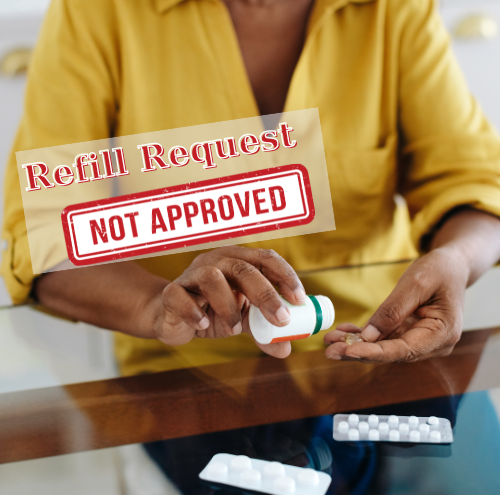
When Refill Requests Need a Second Look
That single refill request just consumed 10 minutes. You have 14 more waiting.
This is the part of medication management that no one tracks and no one pays you for. It is invisible work that no one is compensating you for, and it is one of the highest-volume sources of after-hours labor in primary care.