


Real-Time Documentation: Why the Note Belongs in the Room
The after-shift charting problem is usually described as a documentation problem. It isn't, not exactly. It's a timing problem.
The note is hard to finish at 9 PM because 9 PM is the wrong time to be finishing it. The visit happened at 2 PM. By 9 PM, the specific details (what the patient said, what you found, what you were thinking when you made the decisions you made) have faded. The note you write at 9 PM is a reconstruction, not a record.
Real-time documentation is the practice of building the note during the visit, while the patient is in the room and the clinical encounter is still live. It is the most direct solution to the after-shift charting backlog, and it is a skill that NP training does not teach.
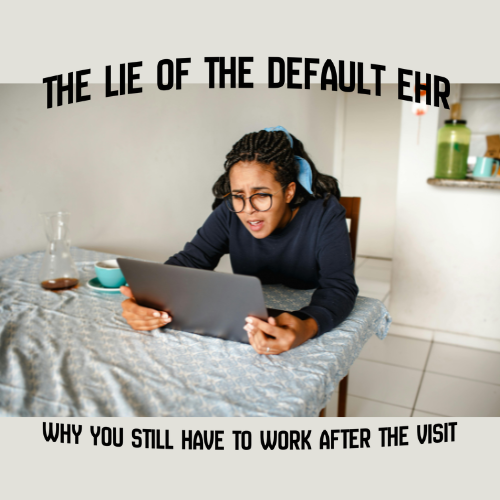
The Lie of the Default EHR: Why You Still Have Work After the Visit
Most of the NPs I precept say some version of the same thing in their first weeks: the EHR is slowing me down. I hear it from NPs starting new jobs, too. Every click takes longer than it should, every note takes too long to build, and the charting that should end with the visit follows them home.
The usual conclusion is that the software is bad, or that they are slow. Usually it is neither. The EHR they are using has not been set up for them yet.