


The Mythical All-in-One Clinical Reference
If you've ever found yourself scrolling through a medical app at 9 p.m., trying to nail down a diagnosis for a patient you saw that day, you're not alone. I've been there. In many online groups for nurse practitioners, I see the same question: "What's the best clinical reference tool for primary care? I need one place that has everything."

Are You a Burnt-Out NP? The Answer Might Not Be a New Job.
To the FNP who just wrote in a Facebook group, "I absolutely hate this job" and is feeling lost and hopeless: I see you. I’ve felt every single one of those emotions. The heavy feeling in your chest, the sense that this was all a huge mistake… that was me. I working as an NP for more than a year and I was convinced primary care was the problem. So I changed jobs. And then I changed jobs again. And guess what? The problem was still there.

Delegation Is Not About Hierarchy; It's About Survival.
Do you ever feel like you alone are responsible for every single task, every detail, every day?
It’s the pervasive belief that "If I don't do it, it won't get done right". This belief, though well-intentioned, is a direct pipeline to unpaid after-hours work and burnout. When you try to do everything yourself, you ensure your time is consumed by non-provider tasks, forcing your licensed, high-value work into your personal time.
It's time for a critical mindset shift: Delegation is a core leadership skill that protects your 40-hour workweek.
The Compensation Myth: Look Beyond the Starting Salary of Your First NP Job
One of the most disheartening moments in the new NP job search is the salary conversation. You have invested years and significant money into becoming a nurse practitioner. You open the offer letter, and the number is not dramatically different from what you earned as an experienced RN. In some cases, it is lower.
The question that follows is natural: was this worth it?
The answer is more complicated than the starting salary suggests. Because the comparison between your experienced RN pay and your entry-level NP pay is structurally misleading. And the number on your offer letter is only the beginning of what determines your real compensation.

Beyond the Patient Room: The Business Acumen Every New NP Needs
NP school taught you how to diagnose and treat. It did not teach you how your job makes money. And that gap in understanding leaves you vulnerable in ways that clinical skill alone cannot fix.

The NP Negotiation Playbook: What to Ask For (Besides Salary)
But salary, on its own, tells you almost nothing about whether a job will be sustainable. A generous base salary in a role with no protected administrative time, no structured onboarding, and no mentorship is not a good offer. It is a well-compensated path to burnout. And if you leave that role within the first year, the credentialing delay to start somewhere new can cost you months of income, which erases the salary advantage entirely.

Your First NP Job: More Than a stepping stone
If you are approaching your first NP job search the same way you approached your first RN job search, the assumptions underneath that strategy are about to cost you.
Not because you are doing something wrong. Because the two job markets operate under completely different rules. The timelines are different. The support structures are different. The consequences of a bad fit are different. And the stakes of your first year in practice are higher than most new graduates realize until they are already inside a role that is not working.

The Layoffs That Proved Our Workload Was Unsustainable
When I landed a position at a large primary care practice, I was confident I had done my due diligence. The interview process was thorough: multiple rounds with decision-makers. I asked about workload, administrative time, and support staff. I asked about the company’s financial health. They pointed to their opening of a new site as evidence of growth.
What they told me was true. It was far from the whole truth.

5 Must-Ask Questions Every NP Should Ask Before Accepting a Job Offer
Most NP job interviews operate as auditions. You prepare your answers. You dress for the part. You try to make a good impression. And when it is over, you wait to hear whether you passed.
That dynamic is backwards.
You are about to commit your license, your time, and at least 12 to 18 months of your career to this organization (because credentialing timelines make leaving expensive). The interview is not just your chance to impress them. It is your only window into the operational reality of the job before you are contractually inside it.
The questions below are not icebreakers. They are diagnostic tools. Each one is designed to surface a specific piece of structural information that the job description will never tell you. And the way the employer answers, the specificity, the comfort level, the deflection, tells you as much as the content of the answer itself.
Why Perfectionist Charting Is a Pipeline to Unpaid Work
If your notes run long, your evenings run longer. That is not a coincidence. It is a predictable outcome of a system that never defined what sufficient actually means.
Most NPs who spend hours finishing notes after clinic are not doing it because they lack clinical skill. They are doing it because they were taught to be thorough, they were never taught what thorough looks like at the documentation level, and they are working inside jobs that exploit that gap without naming it.
This article breaks down why perfectionist charting is a job design problem, not a clinical standard, and what it is actually costing you in unpaid labor.
🛡️ Beyond Burnout: How to Leave a Toxic Practice (or Survive it) with Your Professional Identity Intact
The first three parts of this series covered what to do when you inherit an unsafe panel, what happens when you refuse to continue it, and why the problem is organizational rather than personal. This part is about the decision that follows all of that: whether to stay in the environment that produced it.
That decision is not simple, and it is not only emotional. It is a structural one. The question is whether the organization is capable of change and at what cost you are willing to wait for it.
I can tell you from my own situation that the institution eventually did change. New policies, evidence-based guidelines, a formal meeting with pharmacy, behavioral health, and primary care leadership. By the time that meeting happened, I was riding out my notice. The change came. It came too late for me to benefit from it, and the cost of staying long enough to see it was more than I had left to give.
That is not a cautionary tale against staying. It is an honest account of what staying through structural change can require. Know what you are deciding before you decide it.
Unsafe Prescribing is a System Problem, (Not Just a Provider Problem)
Part 3 of 4: Why Individual Refusal Is Not Enough
Parts 1 and 2 of this series covered what to do when you inherit an unsafe prescribing panel and what to expect when you refuse to continue it. This article is about the question underneath both of those: why does this situation exist at all, and what does it actually take to change it?
The answer is not a better-trained provider. The answer is organizational accountability. And the story of how that accountability finally arrived in my situation is not a satisfying one.

When Safe Practice Makes You the "Difficult" Provider
When you draw a line and refuse to continue unsafe prescribing, you are doing the right thing. What happens next is that you become the least popular person in the building.
Patients who were trained by the previous provider to expect easy refills will be angry. Leadership, which quietly tolerated the risk for however long this was going on, will be annoyed that you are creating disruption. Colleagues will respond in ways that have more to do with their own practices and their own discomfort than with anything you are actually doing wrong. And people who cannot prescribe at all will tell you what you should be prescribing.
This is not a clinical problem. It is a cultural one. Here is how to hold the line through it.

When Inheriting a Patient Panel Means Inheriting Unsafe Prescribing
A version of this question comes up regularly in NP communities, almost always from someone who is new to her workplace:
“I inherited a panel and I’m realizing the previous provider was prescribing chronic benzodiazepines and managing psychiatric conditions that are really outside of primary care. I want to practice safely but I’m not sure how to transition these patients without everything blowing up.”
Here is the honest answer: things are going to blow up. Patients will be upset. People around you will pressure you to go along. Some of them will do it politely and some of them will not. If you want to practice safely, you do not have a choice about any of that.
I know this because I have been in this exact position. Here is what happened, and here is what to do.
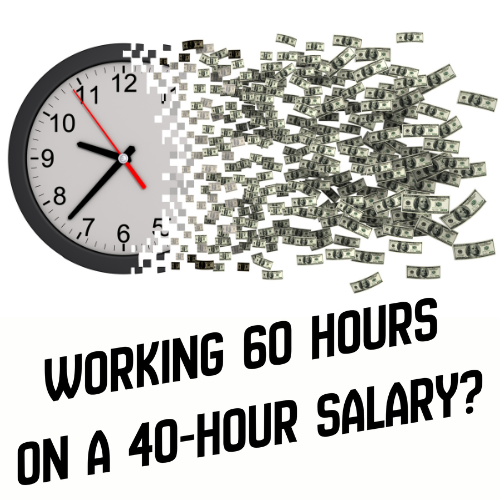
Stop Working a 60-Hour Job on a 40-Hour Salary
You didn’t invest in years of school just to give away 20 hours of free labor every week.
Yet many nurse practitioners are functionally working a 60-hour job on a 40-hour salary.
This is not a time management issue.
It is a structural design issue.
And if it is not addressed clearly, it becomes a nurse practitioner burnout cycle that feels personal — even though it isn’t.
Let’s name what is actually happening.

FAQ: Chart Smart Mastery
Answers to Your Toughest Questions About Primary Care Workload Management
You are working 50 to 60 hours on a 40-hour salary. Your inbox follows you home. Your notes bleed into your evenings. And the advice you keep hearing (“practice self-care,” “set boundaries,” “learn to say no”) does not address the actual structural problem.
You were taught to diagnose and treat. You were never taught the day-to-day operational skills required to complete primary care work inside paid hours. That is not a personal failing. It is a training gap. And it is the reason you are here.
Below are the most frequently asked questions about Chart Smart Mastery and how it helps primary care NPs stop diluting their salary with free labor.
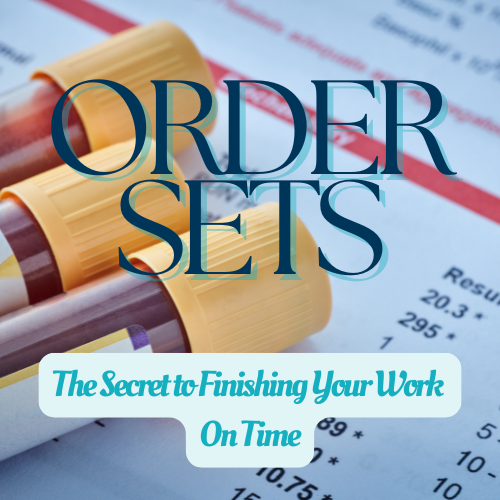
The Secret to Finishing Your Work on Time? It's Your Order Sets.
Your last patient left 45 minutes ago. You are still clicking through labs, imaging orders, and referrals, one by one, rebuilding the same hypertension workup you built three times already today. That repetitive clicking is not clinical care. It is invisible work that no one is paying you for.
There is a way to turn that entire process into a single action. It is called an EHR order set, and it is one of the most underused time protection strategies in primary care.

Job Hunting for PCPs: 8 Warning Signs You Can’t Ignore
Finding the right job as a primary care provider is not primarily about salary. It is about whether the role is structurally designed to be sustainable or structurally designed to extract unpaid labor.
Every NP job has challenges. That is the nature of primary care. But some jobs are built on a model that depends on your willingness to absorb work outside your compensated hours. The interview process is where you see that model, if you know what to look for.

Beyond Billing: Why a Thorough H&P Protects You, Your Patients, and Your Practice
If you have ever opened a chart before a visit and found vague notes, an outdated medication list, and no clear record of which active problems were actually being managed, you already know what poor documentation costs. You had to start from scratch. You had to guess. You spent your limited visit time doing archaeology instead of medicine.

When Refill Requests Need a Second Look
That single refill request just consumed 10 minutes. You have 14 more waiting.
This is the part of medication management that no one tracks and no one pays you for. It is invisible work that no one is compensating you for, and it is one of the highest-volume sources of after-hours labor in primary care.