

🛡️ Beyond Burnout: How to Leave a Toxic Practice (or Survive it) with Your Professional Identity Intact
You didn't spend years in school to become a refill machine or a risk magnet. Yet, in an unsupportive environment, demanding safe practice can feel like an existential threat to your job, leading to emotional fatigue, guilt, and fear of professional inadequacy.
You are allowed to conclude, "I cannot be the only person practicing evidence-based medicine in the building."
The final, critical decision is to move past the emotional chaos and decide, strategically: Should I stay, or should I leave?
Unsafe Prescribing is a System Problem, (Not Just a Provider Problem)
When you inherit a high-risk patient panel, you are often being asked to solve a systems failure alone. Leadership knowingly allowed unsafe or out-of-scope prescribing to continue because it kept patients quiet and satisfied (even if it put them, and the clinic, at risk).
You are not just correcting unsafe care; you are swimming upstream against a culture that allowed this to form. This is why providers quickly burn out when they attempt to "clean up" a panel without structural backing.

When Safe Practice Makes You the "Difficult" Provider
When you draw a line in the sand and refuse to continue unsafe prescribing (like long-term benzodiazepines or chronic, off-label opioids) you are doing the right thing. But immediately, you become the least popular person in the clinic.
Patients who were trained by the old system to expect "easy refills" will be angry and scared. Your bosses, who quietly tolerated the risk, might suddenly be upset with the chaos your safety measures create. And colleagues might resent the pressure you put on their own practices.
This isn't a clinical problem; it’s a systemic and cultural clash. Here is your playbook for managing the inevitable pushback.

When Inheriting a Patient Panel Means Inheriting Unsafe Prescribing
In primary care Facebook groups, a painful question keeps popping up, often from NPs who are new to their workplaces: "I just took over a panel and realized the previous doctor was prescribing chronic, long-term Xanax and complex psychiatric cocktails. I don't feel safe continuing this. How do I proceed without causing chaos or losing my job?"
If this is your reality, I want you to know two things immediately: You are not alone, and you are doing the right thing by stopping.
You didn't become a provider to function as a refill machine. You became one to provide safe, evidence-based care. The dilemma you face is a high-stakes clash between patient expectations and safe practice.
Stop Working a 60-Hour Job on a 40-Hour Salary
The Cost of Your Altruism
You didn't invest in years of school just to give away 20 hours of free labor every week.
As a hard-working NP, you’re committed to patient care. Unfortunately, that commitment is often weaponized, forcing you into a cycle of unpaid after-hours work that drastically dilutes your effective hourly wage. The idea that you have to work a 60-hour job on a 40-hour salary is not an expectation of a sustainable career; it’s a form of financial self-sabotage.
It’s time to stop the bleed and reclaim the true value of your salary.

FAQ: Chart Smart Mastery
Answers to Your Toughest Questions About Primary Care Workload Management
If you're a primary care provider (PCP) struggling with overwhelm, your deepest fear is likely Professional Inadequacy and Patient Harm.

The Secret to Finishing Your Work on Time? It's Your Order Sets.
Instead of manually searching for and clicking on each item one by one, a well-designed order set allows you to apply a comprehensive plan with a single action. Think of it as a pre-loaded shopping cart for your clinical decisions.
This isn’t just about speed. It’s about making your workday sustainable…
Job Hunting for PCPs: 8 Warning Signs You Can’t Ignore
Finding the right job as a primary care provider (PCP) is about more than just salary and benefits—it’s about setting yourself up for long-term success in a workplace that supports both your professional growth and work-life balance. While every job has its challenges, some warning signs can indicate a poor fit or a workplace that could lead to burnout.

Beyond Billing: The Power of a Thorough History and Physical
Documenting a thorough history and physical examination is crucial, even when billing based on time or medical decision-making.
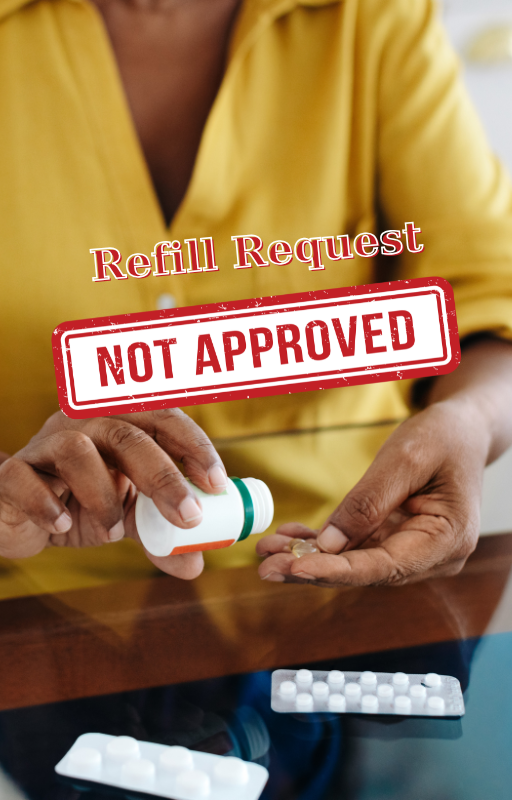
When Refill Requests Need a Second Look
Have you ever received a refill request that didn’t feel right? Whether it’s overdue labs, expired prescriptions, or potential misuse, rejecting a refill request often requires careful explanation to the patient.

Streamlining Your Charting Process for Prior Authorization Requests
As primary care providers, we've all experienced the frustration of prior authorizations (PAs) disrupting our workflow. Whether it's for medications, tests, or treatments, PAs often feel like a barrier between your clinical judgment and the care your patient needs. .

The Pre-Charting Advantage
Pre-charting is a proactive approach to ensuring efficiency and accuracy in patient encounters.

I Worked Myself Sick
I never imagined that a meticulously planned vacation could end with me too sick to go on the trip. I was so excited for this eight-day adventure that I had carefully curated every detail…