

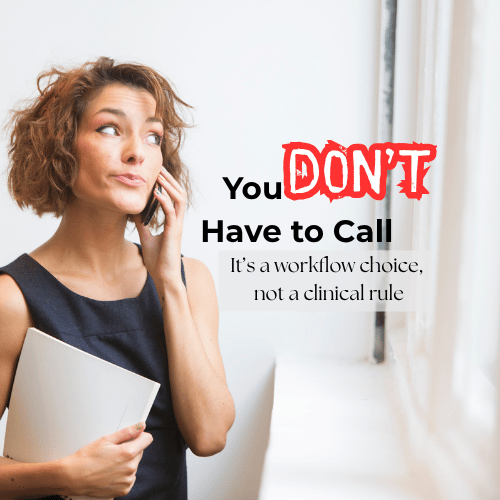

The Doorknob Dilemma: Clinical Leadership in the Final Minutes
We’ve all been there. Your hand is on the handle, the visit feels complete, and that’s when the patient says: "Oh, by the way, I’ve been having some chest pain..."
In that moment, your clinical brain kicks into high gear. You know that stay or go, your schedule is about to change. It’s easy to feel the pressure of the waiting room, but as a Primary Care Provider, your first responsibility is to the person in front of you.
Handling the "One More Thing" isn't about ignoring the clock; it's about expert triage. It’s about using your skills to decide, in seconds, if this is a clinical priority or a deferrable concern.

Dealing With Patients Demanding Antibiotics for a Cold?
If you work in primary care or urgent care, you don’t need statistics to know this is a problem.
It’s 4:45 pm.
The patient has congestion, cough, and body aches for three days.
They say, “Antibiotics always work for me.”
You already know antibiotics aren’t indicated, but the emotional labor, time pressure, and documentation risk make these visits exhausting.

When Safe Practice Makes You the "Difficult" Provider
When you draw a line and refuse to continue unsafe prescribing, you are doing the right thing. What happens next is that you become the least popular person in the building.
Patients who were trained by the previous provider to expect easy refills will be angry. Leadership, which quietly tolerated the risk for however long this was going on, will be annoyed that you are creating disruption. Colleagues will respond in ways that have more to do with their own practices and their own discomfort than with anything you are actually doing wrong. And people who cannot prescribe at all will tell you what you should be prescribing.
This is not a clinical problem. It is a cultural one. Here is how to hold the line through it.

When Inheriting a Patient Panel Means Inheriting Unsafe Prescribing
A version of this question comes up regularly in NP communities, almost always from someone who is new to her workplace:
“I inherited a panel and I’m realizing the previous provider was prescribing chronic benzodiazepines and managing psychiatric conditions that are really outside of primary care. I want to practice safely but I’m not sure how to transition these patients without everything blowing up.”
Here is the honest answer: things are going to blow up. Patients will be upset. People around you will pressure you to go along. Some of them will do it politely and some of them will not. If you want to practice safely, you do not have a choice about any of that.
I know this because I have been in this exact position. Here is what happened, and here is what to do.

I Worked Myself Sick
I never imagined that a meticulously planned vacation could end with me too sick to board the plane. I had curated every detail of this eight-day trip: YouTube videos about the region, travel guides, new clothes, packing for two climates. I got my travel vaccines a month before departure. The plan was simple: work a full day, catch the evening flight, sleep on the plane, and wake up ready to explore.